 Available in US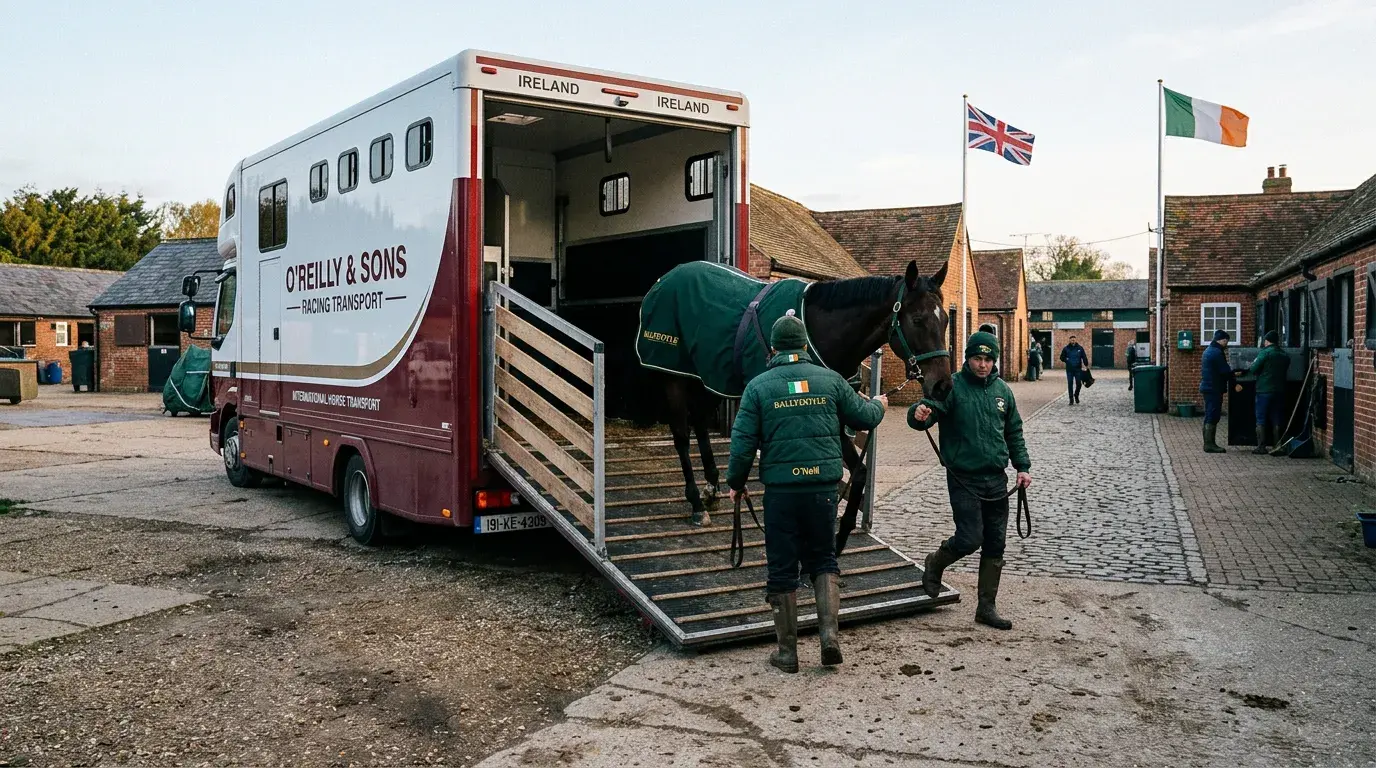
The Cesarewitch regularly attracts runners from beyond Britain’s shores. Irish raiders dominate foreign participation, with trainers like Willie Mullins treating the race as a primary autumn target. French and German entries appear occasionally, adding continental European flavour to fields already enriched by Celtic competition.
When raiders cross the Irish Sea, they bring different preparation methods, unfamiliar form lines, and sometimes underestimated ability. The journey itself presents challenges: travel stress, acclimatisation requirements, and the disruption of routine all affect horses differently. Some thrive on the adventure; others find the experience depleting.
Understanding overseas participation patterns helps bettors assess which raiders warrant respect and which face hurdles that home-trained horses avoid. This guide examines who travels, analyses international raider performance, and explains the factors that influence travelling horses’ chances.
Overseas Entry Patterns
Irish entries dominate overseas participation in the Cesarewitch. Geography explains part of this: the short crossing from Ireland to Britain poses minimal logistical challenges, and Irish trainers regularly compete at British fixtures throughout the year. The Cesarewitch simply represents another opportunity in established raiding patterns.
Willie Mullins has won the Cesarewitch three times in the last seven years, establishing himself as the race’s dominant overseas force. His success reflects systematic targeting rather than opportunistic entries. Mullins identifies horses suited to marathon flat racing, campaigns them specifically toward the Cesarewitch, and executes with precision that British rivals struggle to match.
Other Irish trainers follow Mullins’ lead, entering horses they believe possess the stamina and class for Cesarewitch competition. Joseph O’Brien, Gordon Elliott, and various smaller yards send raiders when they believe conditions suit. The collective Irish presence typically includes five to ten runners annually, a significant portion of the thirty-four-horse field.
French entries appear less frequently but occasionally make impact. French staying handicaps differ substantially from British equivalents, and trainers who spot opportunities sometimes send horses to exploit perceived edges. Language barriers, unfamiliar regulatory requirements, and limited historical engagement reduce French participation, but those who do travel sometimes outperform market expectations.
German participation remains rare despite strong staying traditions in German racing. The journey from Germany to Newmarket involves greater complexity than the Irish crossing, and cultural factors may discourage continental trainers from targeting a race whose intricacies favour those with deep British or Irish racing knowledge.
Entry patterns reveal which overseas trainers take the Cesarewitch seriously. Mullins’ multiple entries signal genuine intentions; other trainers may enter speculatively, withdrawing if handicap assessments prove unfavourable. Monitoring which overseas horses survive forfeit stages helps distinguish serious contenders from placeholder entries.
International Raiders Analysis
Thirteen of the last twenty-three Cesarewitch winners came from National Hunt trainers—a category that includes most successful Irish raiders. This pattern reflects the stamina advantages that horses bred and trained for jumping possess over pure flat specialists. Irish National Hunt yards, in particular, develop horses whose marathon ability transfers effectively to flat racing’s extreme distances.
Irish horses often carry ratings that underestimate their true ability. British handicappers must assess horses based on Irish form, which involves different opposition and different track characteristics. When Irish horses have demonstrated ability over hurdles that their flat ratings do not capture, they enter the Cesarewitch effectively well-handicapped.
The cross-border handicapping challenge creates systematic opportunities. A horse rated 85 on the flat but clearly capable of 95 based on jumping performances carries a weight burden twelve pounds lighter than their true ability justifies. Identifying such discrepancies—easier for those familiar with both codes—represents a genuine edge in Cesarewitch betting.
Continental raiders face different challenges. French and German form proves harder for British punters to assess, limiting market efficiency in incorporating overseas performances. When continental horses run well, their prices often reflect uncertainty rather than informed assessment. This cuts both ways: underestimated horses sometimes deliver at generous odds, but overbet horses fail when their form proves misleading.
Jockey arrangements influence overseas runners’ chances. Irish trainers sometimes bring familiar jockeys; others book British riders who know Newmarket’s idiosyncrasies. The choice reflects trainer confidence and tactical intentions. A horse shipped with a regular work rider likely faces different expectations than one assigned a top British jockey engaged specifically for the Cesarewitch.
Travel Factors and Performance
Travel affects horses physically and psychologically. The ferry crossing from Ireland, while brief, disrupts routines and exposes horses to unfamiliar environments. Some horses handle this stress easily; others arrive unsettled and require recovery time before racing.
Experienced travelling horses generally cope better than first-time raiders. Horses that have competed successfully in Britain before understand the process and settle quickly upon arrival. First-time travellers face unknown reactions—some thrive on new experiences, others find them distressing. Checking whether overseas entries have previous British form helps assess likely travel impact.
Timing of arrival matters considerably. Horses that arrive days before the race have opportunity to settle, familiarise themselves with new surroundings, and recover from travel fatigue. Those shipped on race morning sacrifice acclimatisation for minimal time away from home routines. Different trainers favour different approaches, and neither proves universally superior.
Quarantine requirements no longer impede Irish raiders following regulatory harmonisation, but travel logistics still consume trainer attention. Organising transport, accommodation for staff, and race-day logistics adds complexity that home trainers avoid. The most successful overseas operations—Mullins’ being the obvious example—have systematised these processes, reducing friction through experience.
Weather can disrupt travel plans unpredictably. Rough seas delay ferry crossings; fog grounds flights carrying jockeys. These disruptions rarely affect well-organised operations significantly, but they add variables that domestic runners do not face. Late travel complications occasionally force scratchings or compromise preparation in ways that affect performance.
Course familiarity represents another factor favouring domestic horses. British trainers know Newmarket intimately; their horses may have raced there previously. Irish raiders typically arrive without such familiarity, relying on jockey guidance and trainer research rather than direct experience. The Rowley Mile’s long straight and gradual uphill finish can surprise horses unused to its demands.
For bettors, the key question involves distinguishing genuinely competitive raiders from tourists. Horses from yards with established Cesarewitch records warrant serious attention. Those entering from trainers without British racing experience face additional unknowns that markets may or may not price correctly. When Mullins enters multiple runners, markets adjust odds accordingly; when unfamiliar names appear in entry lists, pricing reflects greater uncertainty.
Despite these challenges, overseas raiders win the Cesarewitch regularly enough to demand respect. The advantages they bring—unfamiliar form for handicappers to assess, stamina-oriented preparation, and tactical sophistication from trainers who specialise in staying tests—offset travel challenges sufficiently to make Irish horses particularly competitive. The Cesarewitch would be a poorer race without them, and betting markets would be less interesting without the uncertainty they introduce.
