 Available in US
This guide strips away the guesswork.
Thirty-four horses, two miles and two furlongs of Newmarket turf, and somewhere in that sprawling field lurks a winner most punters will overlook. The Cesarewitch Handicap has built its reputation on exactly this kind of chaos: according to GeeGeez analysis, 15 of the last 23 winners returned at double-figure odds, with only four winning favourites since 1993. For bettors, that statistic alone separates this race from almost any other on the British Flat calendar. The market gets it wrong more often than right.
This guide strips away the guesswork. Data cuts through the 34-horse field when intuition cannot. Weight trends, draw biases, trainer patterns, and age profiles all leave statistical fingerprints that narrow the search from thirty-four possibilities to a handful of genuine contenders. The numbers are ruthless in what they reveal: runners carrying more than 9st 2lb have failed to win for over a decade; horses drawn in stalls 14 and above face measurable disadvantages; National Hunt trainers have produced more than half of recent winners despite being nominally outsiders in a Flat contest.
What follows is a methodical examination of every angle that matters when betting on Britain's marathon handicap. The race profile and handicap mechanics come first, establishing what the Cesarewitch actually demands from its runners. Statistical trends then expose the patterns that historical data confirms, not speculates about. Betting strategies translate those patterns into actionable approaches, whether through each-way plays, ante-post positioning, or systematic filtering. The 2024 whip controversy receives its own section because it illustrated how post-race regulatory decisions can affect outcomes and settlements.
Newmarket's October meeting provides the backdrop, but the work happens long before the stalls open. With British racecourse attendance exceeding 5 million for the first time since 2019 in 2025, the Future Champions Festival attracts substantial crowds seeking live betting action. This is where that work begins.
What 186 Years of Data Reveal About Cesarewitch Winners
- Weight matters most: 83% of the last 23 winners carried 9st 2lb or less, with all twelve recent winners staying within this ceiling. Eliminate heavier-weighted runners as your first filter.
- Draw low, finish first: 14 of 23 winners emerged from stalls 13 or lower. The Rowley Mile straight rewards early positioning secured from inside draws.
- Target ages 4-7: eleven of twelve recent winners fell within this bracket where physical maturity meets competitive handicap marks.
- National Hunt trainers dominate: 13 of 23 winners came from jumping yards, with Willie Mullins alone winning three of the last seven runnings.
- Each-way betting suits the format: with 15 of 23 winners returning double-figure odds, place-paying positions offer value that win-only betting cannot match.
Contents
Race Profile: The 2m2f Marathon
The Cesarewitch Handicap takes place at Newmarket's Rowley Mile course during the Future Champions Festival in October 2026. The distance of two miles and two furlongs makes it one of the longest Flat races staged in Britain, exceeded only by the Queen Alexandra Stakes at Royal Ascot. Fields regularly reach the maximum capacity of 34 runners, creating a spectacle that rewards stamina, tactical intelligence, and the ability to handle a cavalry charge of competitors.
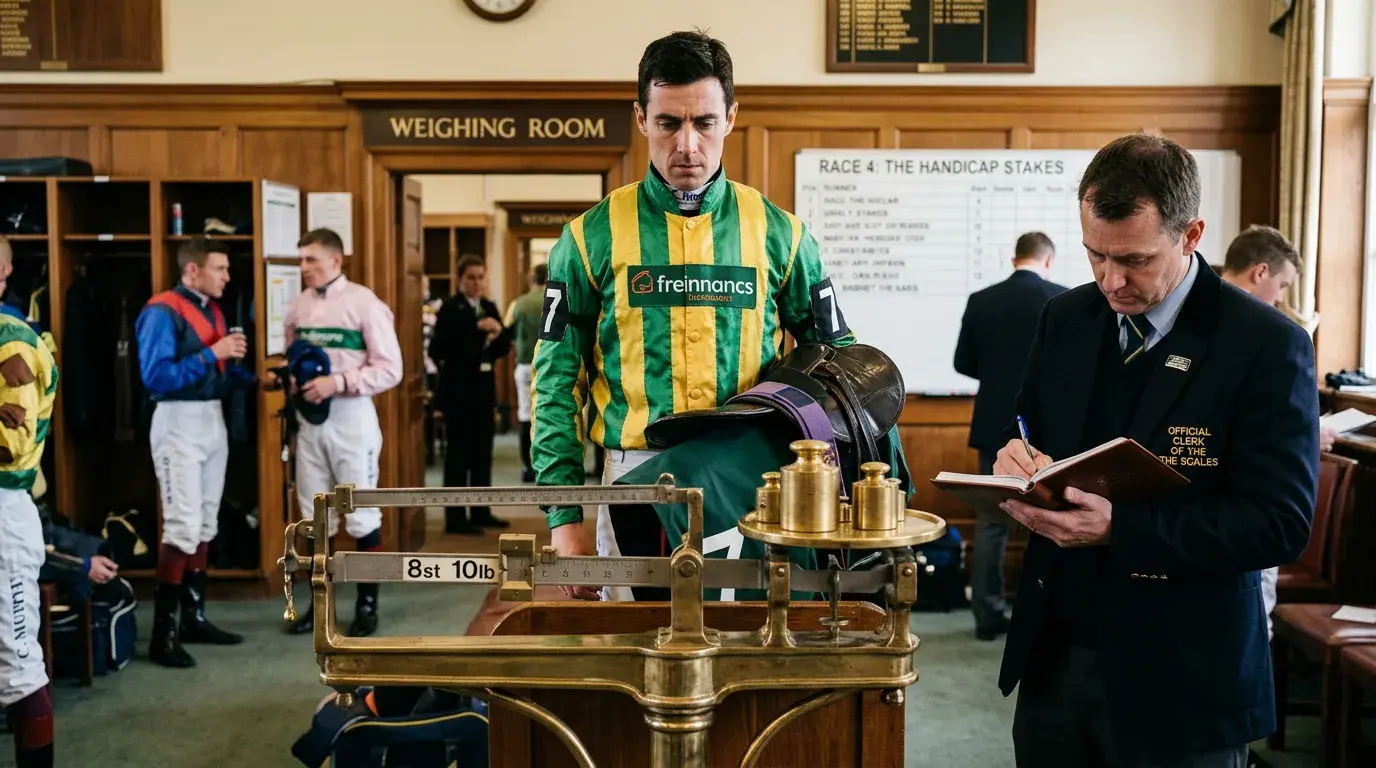
As a heritage handicap, the Cesarewitch sits within a category of historic races that predate modern Group classifications. These races carry weight allocations based on official ratings rather than the penalty structures of Pattern events. The distinction matters for bettors: heritage handicaps create conditions where exposed handicappers compete against lightly-raced improvers, where official marks may not reflect current ability, and where form analysis requires deeper examination than simply reading race grades.
What is a heritage handicap? Heritage handicaps are long-established British races that retain their original handicap format rather than converting to Listed or Group status. The term encompasses races like the Cesarewitch, Cambridgeshire, Lincoln, and Ebor, all of which attract large fields and betting interest despite lacking Pattern race prestige. Prize money typically exceeds many Listed contests, and the competitive nature of these handicaps often produces closer finishes than weight-for-age events.
In nearly 186 years of Cesarewitch history, no horse has ever defended the title successfully the following year. That remarkable statistic reflects the unique demands this race places on its winners. The combination of marathon distance, large field chaos, and handicapping adjustments makes repeat victories almost impossible. Horses who win the Cesarewitch typically carry penalties or higher marks that prove insurmountable twelve months later, while the distance itself may not suit them in subsequent seasons.
Entry conditions require horses to be rated between a lower limit and a ceiling that varies slightly each year. The BHA handicapper assigns weights based on official ratings, with the topweight carrying approximately 10st and the bottom weight around 8st 2lb. That spread creates a genuine levelling effect across the field, which explains why long-priced winners emerge so frequently. The October timing places the Cesarewitch at the tail end of the Flat season, meaning form lines extend across the entire summer and into autumn campaigns.
Understanding what the Cesarewitch demands physically and structurally provides the foundation for everything that follows. This is not a race where class alone prevails.
History and Legacy: 1839 to Present
The name Cesarewitch itself carries a story most bettors never consider. In 1839, the race was inaugurated at Newmarket and named in honour of Tsarevich Alexander, the heir to the Russian throne who would later become Tsar Alexander II. The title Tsarevich, anglicised as Cesarewitch, denoted the eldest son of the Russian Emperor, making this British handicap one of the few major sporting events named for a foreign royal. That Alexander would later be known as the Tsar Liberator for abolishing serfdom in Russia adds historical weight to what might otherwise seem a quaint naming convention.
The race has run continuously except during the two World Wars, making it one of the longest-standing fixtures in the British racing calendar. Early editions attracted aristocratic patronage and significant betting activity, establishing patterns that persist today. The marathon distance has remained essentially unchanged since the race's foundation, though the precise course configuration has varied over the decades as Newmarket's facilities evolved.
The Cesarewitch shares its etymological root with the German Kaiser and the original Latin Caesar. When bettors back a horse in this race, they are quite literally wagering on the outcome of a contest named for a Russian prince who would one day emancipate over 23 million serfs.
What transforms the Cesarewitch from historical curiosity into betting opportunity is its pairing with the Cambridgeshire Handicap in what racing enthusiasts call the Autumn Double. Both races take place at Newmarket within a few weeks of each other, creating a traditional betting challenge where punters attempt to find the winners of both. The double dates back to Victorian times and retains cultural significance even though the practical difficulty of landing both legs ensures few punters succeed. Bookmakers typically offer enhanced odds on the double, recognising its place in racing heritage.
The Autumn Double pairing also highlights essential differences between the two races. The Cambridgeshire runs over nine furlongs, demanding speed alongside stamina, while the Cesarewitch tests pure staying ability over more than twice that distance. Draw biases operate in opposite directions, as subsequent sections will demonstrate. Successful double hunters must recognise that the same horse type rarely wins both races; the skill lies in identifying different profiles for each leg.
Throughout its history, the Cesarewitch has produced moments of betting drama that reinforce why this race commands attention. Long-priced winners have been the norm rather than the exception, reflecting the race's open nature and the difficulty handicappers face in separating so many runners over such an unusual distance. That no horse has won the race in consecutive years across nearly two centuries speaks to how demanding and unpredictable this handicap remains. Understanding why requires examining the mechanics that govern weight allocation.
The Handicap System Explained
Every horse entered in the Cesarewitch carries weight determined by its official rating, a numerical assessment published by the British Horseracing Authority that attempts to measure racing ability. The handicapper's task is deceptively simple in concept: assign weights that give every horse a theoretically equal chance of winning. In practice, this creates a complex puzzle where improvement, exposure, and race conditions constantly shift the equation.
Official ratings operate on a scale where each pound of weight equates to approximately one length over most distances. A horse rated 100 should, in theory, finish level with a horse rated 94 if the latter receives six pounds less to carry. The marathon distance of the Cesarewitch complicates this calculation because stamina limitations may outweigh pure ability ratings. A horse with a 95 rating who struggles to stay two miles might be beaten by a genuine stayer rated 88 who relishes the trip.
Handicap versus Listed race. In a Listed race, horses carry weights based on age, sex, and any penalties accumulated from previous victories. The best horse on ability should win more often than not. In a handicap, the weight allocation specifically aims to negate ability differences, meaning form, fitness, and conditions often matter more than raw class. The Cesarewitch field typically spans a rating range of roughly 20 pounds, creating genuine uncertainty that Listed races rarely offer.
The BHA handicapper reviews performances and adjusts ratings after each run. Horses who win typically see their marks raised, sometimes significantly for impressive victories. This reassessment process explains why previous Cesarewitch winners struggle to repeat: a horse winning off a mark of 88 might find itself rated 100 or higher the following October, facing the challenge of conceding weight to the entire field rather than receiving it.
For bettors analysing the Cesarewitch, understanding handicap dynamics reveals why certain profiles excel. Lightly-raced horses offer upside because their current marks may underestimate their ability. Horses dropping in grade from Group or Listed races sometimes carry ratings that reflect their earlier potential rather than current form. Improvers who have risen through the handicap quickly may still be ahead of the assessor, though the risk increases as their marks climb.
Weight itself tells only part of the story. A horse allotted 9st in the Cesarewitch faces physical demands different from one carrying 8st 4lb, but both must negotiate the same two miles and two furlongs against identical competitors. The trends explored in subsequent sections demonstrate that lighter weights correlate strongly with success, suggesting either that the handicapper systematically overestimates higher-rated stayers or that the distance itself magnifies small weight differences into decisive advantages.
The handicap system creates the conditions for each Cesarewitch to become a genuine puzzle rather than a predictable procession. Solving it requires looking beyond ratings to the patterns that ratings alone cannot capture.
Statistical Trends That Predict Winners
Numbers do not lie, but they require interpretation. The Cesarewitch produces statistical patterns that remain consistent across decades of racing, offering bettors a genuine edge over those relying on gut instinct alone. Four trend categories dominate: weight distribution, starting position, age profiles, and trainer provenance. Together, these filters can reduce a 34-horse field to fewer than ten serious contenders before any form analysis begins.
Weight Trends: The 9st 2lb Ceiling
The single most reliable statistical pattern in modern Cesarewitch history concerns weight carried. According to Sportscasting UK's trend analysis, of the last 23 winners, 19 carried 9st 2lb or less, representing 83% of the sample. More striking still, every single winner in the past twelve years has fallen within this weight bracket. No horse carrying more than 9st 2lb has won the race since 2013, a streak that shows no sign of ending.
83% of the last 23 Cesarewitch winners carried 9st 2lb or less. All 12 most recent winners stayed within this weight ceiling.

The implications for bettors are immediate. Any horse allocated more than 9st 2lb faces historical headwinds that data suggests are insurmountable over recent cycles. While this does not mean such horses cannot win, the statistical evidence strongly favours looking lower in the weights. The pattern likely reflects the compounding effect of weight over extreme distances: small disadvantages accumulate across two miles and two furlongs in ways that shorter races do not produce.
Draw Analysis: Low Numbers Prevail
Starting position matters in the Cesarewitch, though not in the straightforward manner that sprint handicaps demonstrate. GeeGeez analysis of the last 23 winners reveals that 14 were drawn in stall 13 or lower, suggesting a moderate but real advantage for inside berths. The Rowley Mile's straight configuration should theoretically eliminate draw bias, yet the numbers tell a different story.
The explanation likely involves positioning dynamics rather than pure rail advantage. Horses drawn low can secure their preferred position without expending additional energy navigating through traffic. Over two miles and two furlongs, that energy conservation may prove decisive in the final furlong. Jockeys aboard low-drawn runners face simpler tactical decisions, knowing they can settle where they like without fighting for ground.
| Trend Category | Pattern | Winners | Sample |
|---|---|---|---|
| Weight ≤9st 2lb | Lighter loads dominate | 19 | 23 |
| Draw ≤13 | Low stalls favoured | 14 | 23 |
| Age 4-7 years | Prime racing age | 11 | 12 |
| NH Trainers | Dual-purpose success | 13 | 23 |
| Double-figure odds | Outsiders prevail | 15 | 23 |
Age Profile: The 4-7 Window
According to TheStatsDontLie research, eleven of the twelve most recent Cesarewitch winners fell within the four to seven-year-old age bracket. This concentration reflects the intersection of physical maturity and handicap opportunity. Younger horses may lack the stamina reserves that marathon distances demand, while older horses often carry ratings that reflect past achievements rather than current capability.
The sweet spot emerges because horses in this age range have typically developed the muscular and cardiovascular systems needed for extreme distances while remaining competitive on handicap marks. A five-year-old who has spent several seasons progressing may still be improving, whereas an eight-year-old likely peaked seasons ago and now competes under accumulated rating burden. The statistical evidence strongly supports filtering for this age range.
Trainer Provenance: National Hunt Advantage
Perhaps the most counterintuitive trend concerns trainer backgrounds. According to GeeGeez trend analysis, of the last 23 Cesarewitch winners, 13 came from yards primarily associated with National Hunt racing rather than Flat specialists. This represents more than 56% of winners from a cohort that numerically comprises a small fraction of Cesarewitch entries.
The explanation lies in how National Hunt trainers approach staying Flat races. These yards produce horses bred for stamina who may have competed over hurdles before switching to the Flat. The handicapper may underestimate such horses because their Flat form is sparse, yet their underlying ability and proven stamina make them ideally suited to the Cesarewitch distance. Jump trainers also bring different tactical approaches, often content to settle their runners in the pack before producing late surges that Flat-bred opponents cannot match.
Combining the Filters
No single trend guarantees success, but combining filters narrows the field dramatically. A bettor who eliminates horses carrying more than 9st 2lb, drawn above stall 20, outside the four to seven age bracket, and trained by Flat-only yards will typically reduce 34 runners to somewhere between six and ten genuine contenders. Further form analysis can then identify which of those remaining runners possess the current fitness and tactical profile to prevail.
The statistical approach does not remove risk from Cesarewitch betting, but it does redirect focus toward runners with historical profiles matching past winners. When 15 of 23 winners return at double-figure odds, the market clearly struggles to identify these horses. Bettors armed with statistical filters possess an advantage the market does not.
Betting Strategies for the Cesarewitch
Converting statistical patterns into betting strategy requires understanding how the Cesarewitch market behaves and where value tends to emerge. The race presents distinct opportunities that more conventional events do not, but it also carries risks that demand careful stake management and realistic expectations.
Each-Way Value in Large Fields
With 34 runners and extended place terms, each-way betting becomes the default approach for most Cesarewitch punters. Bookmakers typically pay four or five places at one-quarter or one-fifth the odds, creating scenarios where backing runners at 20/1 or longer can prove profitable even without a winner. The mathematics favour each-way bets when many runners have legitimate chances, precisely the condition the Cesarewitch creates.
Data cuts through the 34-horse field most effectively when combined with each-way staking. A runner matching the weight, draw, and age filters might price at 25/1 in a market struggling to separate genuine contenders from no-hopers. Even if such selections only place one time in five, the returns can exceed flat-rate winning bets on shorter-priced alternatives. The key lies in identifying runners whose place probability exceeds what their odds imply.
Ante-Post Timing
The Cesarewitch ante-post market opens months before October, and prices shift significantly as the race approaches. Trainers like Willie Mullins often engage multiple entries without revealing which will actually run, creating opportunities for bettors who correctly identify genuine contenders early. The risk of non-runners means stakes are lost if selections do not appear, but the potential price advantage can justify that gamble.
Summer months typically offer the best ante-post value because the market lacks clarity on final intentions. Prices contract sharply once entries close and declarations narrow the field. Bettors comfortable with non-runner risk should consider positions in July and August, particularly on horses from established Cesarewitch yards whose participation seems likely regardless of specific race conditions.
Big-field handicap risks. The Cesarewitch can be one of the most volatile betting events of the Flat season. Even strong statistical selections fail more often than they succeed in a 34-runner field. Never stake money you cannot afford to lose, and recognise that variance will produce losing runs even with sound methodology. Consider limiting Cesarewitch stakes to a small percentage of your betting bank.
Market Context: The Changing Landscape
The broader British racing betting market provides context for Cesarewitch strategy. According to the HBLB Annual Report 2024-2025, the Levy yield reached almost £109 million for the financial year, representing the fourth consecutive year of growth and the highest figure since Levy collection reforms in 2017. The BHA 2025 Racing Report confirms that betting turnover fell 4.3% compared to 2024 and 10.7% compared to 2023, a trend that shapes how markets form for the 2026 season.
Alan Delmonte, Chief Executive of the Horserace Betting Levy Board, offered measured assessment in the same report: "Levy yield for the 12 months to 31 March 2025 reached almost £109m, the fourth successive year of increase and the highest since the Levy collection reforms of 2017... This wariness derives from an ongoing fall in betting turnover on British horseracing." The observation highlights a structural shift: total amounts wagered on British racing continue declining even as Levy revenues rise, suggesting markets may be less efficient than previous years when more money flowed through betting rings.
Thinner markets in heritage handicaps can create pockets of value that heavy betting activity would normally eliminate. When fewer pounds chase prices, bookmakers have less incentive to fine-tune their odds. The Cesarewitch specifically may benefit because its large field and unpredictable nature deter casual punters, leaving the market to specialists and those willing to accept high variance.
Practical Filtering Approach

A systematic approach to Cesarewitch betting begins with eliminations rather than selections. Remove horses carrying more than 9st 2lb. Eliminate those drawn above stall 18 unless exceptionally strong form justifies inclusion. Filter out runners outside the four to seven age bracket. Prioritise entries from National Hunt trainers. This process typically leaves between six and twelve runners deserving closer examination.
From that reduced field, form analysis and market assessment take over. Look for improving types whose recent runs suggest upward trajectories. Identify horses with proven stamina credentials at two miles or beyond. Note jockey bookings that indicate stable confidence. Price each remaining runner according to your assessment and compare against available odds to identify value.
The Cesarewitch rewards systematic bettors who apply statistical filters before engaging with form. Each-way betting suits the large field, ante-post markets offer price advantages for those accepting non-runner risk, and declining market liquidity may create opportunities that efficient markets would eliminate.
Cesarewitch · Independent Analysis
Trends Screener & Each-Way Value Model
Trend filters
These are the historical winner profiles. Loosen or switch any of them off to see how the shortlist changes.
Shortlist
–
–
The field, ranked
Pips show which trends each runner matches, in order: weight, draw, age, yard, price.
A screening tool, not a tipping service. Place chances are simulated from the prices you enter; historical trends describe past winners and guarantee nothing about the next running. 18+. Support: BeGambleAware.org and GamCare.
The Autumn Double: Cambridgeshire Connection
The pairing of the Cambridgeshire and Cesarewitch as the Autumn Double dates back to an era when betting coups were plotted in smoke-filled rooms and information moved slowly enough to preserve advantages. Today, the double retains its cultural cachet even though landing both legs remains exceptionally difficult. Understanding why requires examining how differently these two Newmarket handicaps behave.
Contrasting Draw Biases
The draw operates in almost opposite directions between the two races, creating a fundamental challenge for double hunters. While 14 of the last 23 Cesarewitch winners emerged from stalls 13 or lower, the Cambridgeshire historically showed a pronounced bias toward high numbers. Between 2016 and 2023, all winners came from stalls 21 or higher—a pattern so consistent that low-drawn runners faced near-impossible odds. However, the 2024 winner Liberty Lane (stall 4) and more recent results have challenged this trend, demonstrating that course biases can shift over time. Bettors should monitor updated draw statistics rather than relying solely on historical patterns.

This contrast makes sense given the races' configurations. The Cambridgeshire runs over nine furlongs with a crucial turn where high-drawn runners can take the shortest route and maintain momentum. The Cesarewitch's straight two-mile-plus course eliminates turning advantage but amplifies the positioning benefits that low draws provide in crowded fields. Bettors approaching the Autumn Double must mentally switch between these incompatible profiles rather than seeking a single type to back in both races.
Distance and Profile Differences
Beyond draw analysis, the races demand fundamentally different horse types. The Cambridgeshire winner needs speed sustained over a mile and a furlong, the ability to quicken when required, and the temperament to handle a tight finish. The Cesarewitch winner needs stamina reserves that allow maintaining gallop for two miles and two furlongs, the patience to conserve energy through chaotic early stages, and the physical conditioning to outlast rivals who empty approaching the final furlong.
Horses rarely excel at both profiles. The few who have attempted both races in the same autumn typically found one distance suited them far better than the other. Historical analysis shows that backing the same horse in both legs of the Autumn Double almost never succeeds; the double rewards those who identify separate specialists for each race.
Strategic Approach to the Double
Modern Autumn Double strategy involves treating each race independently while recognising accumulated stake management across both legs. Some bettors place substantial each-way bets on the Cambridgeshire before using any returns to fund Cesarewitch wagers. Others identify their Cesarewitch selection first, reasoning that the longer distance and larger field offer greater value potential, then approach the Cambridgeshire as a speculative add-on.
The double format also creates accumulator betting opportunities where bookmakers offer enhanced combined odds. These markets can provide value when both selections appear live, though the independence of the two races means multiplication of small edge bets rarely compensates for the compounded difficulty of landing both winners.
Irish Trainer Dominance: The Mullins Factor
No trainer in the modern era has mastered the Cesarewitch like Willie Mullins. According to OLBG trend analysis, the Closutton yard has won three of the last seven runnings, a strike rate unprecedented in over a century of the race's history. Those victories with Low Sun (2018), Stratum (2019), and Great White Shark (2020) demonstrated a systematic approach to the race that other trainers have struggled to replicate. Mullins is the winning-most Irish trainer of all time, having set a world record of 39 Grade 1 winners in the 2023/24 season.
Mullins approaches staying Flat handicaps as extensions of his National Hunt operation rather than departures from it. His Cesarewitch winners have typically contested hurdle races in Ireland during the winter months, accumulating stamina experience that pure Flat horses cannot match. The handicapper assesses these runners primarily on their Flat form, potentially underestimating the stamina reserves developed through jumping campaigns. This structural advantage persists because the handicapping system evaluates codes separately.
Speaking about his Cesarewitch preparations ahead of the 2021 renewal, Mullins explained his deliberate targeting of the race to Racing TV: "The Cesarewitch is something we can consider for a number of our horses so we keep it in the back of our mind and as the season goes on we sharpen the focus a little bit more for the right ones. It is a privilege to have horses good enough to compete in these races and it would be an honour to equal the record. We are going to give it a good go with the team that we are bringing over."

The National Hunt Trainer Advantage
Mullins represents the apex of a broader trend favouring National Hunt trainers in the Cesarewitch. According to GeeGeez analysis, 13 of the last 23 winners came from yards primarily associated with jumping rather than Flat racing. This 56% strike rate from a cohort that typically comprises less than 20% of entries demands explanation.
Several factors drive National Hunt success. First, horses trained for jumping develop stamina through work designed for three-mile chases rather than mile-and-a-half Flat races. That conditioning translates directly to the Cesarewitch distance. Second, jump trainers select horses with proven staying ability, filtering out speed types who might struggle beyond twelve furlongs. Third, the Flat handicapper may lack the data to accurately assess horses whose best form came over hurdles in Ireland, creating systematic underestimation.
The dual-purpose model also produces horses who handle different racing scenarios. Jump races require tactical intelligence, the ability to measure effort, and comfort in bunched fields where contact is common. These qualities prove valuable in a 34-runner Cesarewitch where the early stages resemble the cavalry charges seen at Irish festivals. Flat specialists accustomed to smaller fields and cleaner racing sometimes struggle with the Cesarewitch's chaos.
Identifying Future Irish Raiders
For bettors seeking to anticipate Mullins and other Irish trainers, certain patterns emerge. Watch for horses contesting late-summer Flat handicaps in Ireland, particularly at tracks like Galway, Listowel, and the Curragh. Entries in the Irish Cesarewitch often provide trial form that translates to the Newmarket version. Horses who finish strongly over extended distances in Ireland, even without winning, may offer value in ante-post Cesarewitch markets before connections confirm their travel plans.
The Irish challenge shows no sign of weakening. With Mullins continuing to target staying Flat handicaps as part of a broader dual-purpose strategy, and with the handicapping advantages remaining intact, Irish raiders deserve respect in every Cesarewitch market. Heading into the October 2026 renewal, punters should monitor summer entries from Closutton and other Irish yards with Cesarewitch pedigrees.
2024 Controversy: The Disqualification, Appeal and What It Means for Bettors
The 2024 Cesarewitch produced a result that forced every serious bettor to reconsider how they approach handicap betting. Alphonse Le Grande crossed the line first, beating Manxman by a nose in a driving finish. Three days later, the horse was disqualified after the Whip Review Committee determined that jockey Jamie Powell had used the whip ten times during the race, exceeding the permitted maximum of six strikes for Flat racing by four. Powell received a 28-day suspension, and the race was initially awarded to Manxman. However, connections of Alphonse Le Grande appealed the decision. In November 2024, an independent BHA disciplinary panel ruled that one of Powell's strikes was not intentional, as he made contact with the horse while moving his whip from one hand to the other. With only nine strikes counted, the disqualification threshold was not met, and Alphonse Le Grande was reinstated as the winner. Powell's suspension was reduced to 20 days.
This was no marginal infringement. Under the BHA whip rules introduced in 2023, disqualification becomes mandatory when a jockey exceeds the strike limit by four or more. The rule exists specifically to prevent jockeys from calculating that a fine or short suspension might be worth accepting in exchange for winning a valuable race. By making the penalty automatic and inescapable, the BHA removed any cost-benefit analysis from extreme whip use.
The Alphonse Le Grande saga demonstrated both the rigour and the potential for appeal within the BHA's enforcement system. The initial disqualification was only the third time in approximately 16,000 races that a winner had been disqualified for whip breaches since the enhanced rules took effect. That rarity reflects how clearly the regulations deter most jockeys, with BHA analysis showing that 76% of whip violations involved just one strike above the permitted limit. Most jockeys miscounted or lost awareness in the heat of a finish; very few deliberately exceeded limits by margins that triggered disqualification.
Regulatory Intent and Enforcement
Brant Dunshea, the BHA's Chief Regulatory Officer, explained the philosophy behind the disqualification threshold in comments following the 2024 Cesarewitch decision: "Disqualification was introduced as a deterrent against flagrant misuse of the whip, in order to safeguard the fairness of race results and perception amongst the sport's fans. It has since been adopted by other major racing nations."
The statement highlights two concerns that drive enforcement. First, flagrant whip use represents a welfare issue that conflicts with modern expectations of how animals should be treated in sporting contexts. Second, betting integrity requires that race results reflect genuine competition rather than outcomes achieved through rule violations. A horse driven past rivals through prohibited assistance distorts the market in ways that undermine confidence in racing as a betting medium.
What this means for bettors. The 2024 Cesarewitch illustrated that race outcomes can remain uncertain for weeks after the finish line. Initial settlements may be reversed on appeal, while disqualifications themselves can be overturned. Bettors should recognise that driving finishes carry regulatory risk, but also that the appeals process provides safeguards. Each-way positions offer some protection against uncertainty, though settlement policies vary between bookmakers regarding reversed disqualifications.
Whip Rules and the Cesarewitch Context
The Cesarewitch's marathon distance creates particular whip pressure. Jockeys aboard tiring horses may instinctively reach for the whip more frequently as legs hollow and response diminishes. The final furlong of a two-mile-two-furlong race can feel interminable to a jockey seeking maximum effort from an exhausted mount. Understanding this context helps explain why the 2024 disqualification occurred in exactly this race.
Current regulations permit six strikes on Flat races and seven over jumps. Each strike must be separated by time allowing the horse to respond. Continuous rapid striking, regardless of count, can also trigger penalties. The rules apply to all jockeys regardless of experience, though BHA analysis shows that apprentice and amateur jockeys offend at significantly higher rates than fully professional riders.
For bettors, the practical implication involves adjusting expectations rather than avoiding races. Horses ridden by experienced jockeys who demonstrate discipline under pressure may offer slight edges over those paired with less proven riders. In driving finishes, consider whether your selection's jockey has a history of whip violations. These margins are small but not negligible when separating otherwise similar contenders.
Past Winners Analysis
Examining past Cesarewitch winners transforms abstract trends into concrete examples. The horses who prevailed in recent years share characteristics that validate the statistical patterns outlined earlier. Reviewing their profiles reinforces which factors matter and which can be safely discounted.
The record of recent Cesarewitch winners reveals consistent patterns across weight, age, draw, and trainer profile. A statistical summary of the last seven years demonstrates how reliably these trends have held.
| Trend | Pattern | Recent Winners |
|---|---|---|
| Weight | All ≤9st 2lb | 7 of 7 |
| Age | 4-7 years old | 7 of 7 |
| Draw | Stalls 1-13 | 6 of 7 |
| Trainer Type | NH or Dual-Purpose | 6 of 7 |
| Starting Price | Double-figure odds | 5 of 7 |
Willie Mullins dominated the period from 2018 to 2020 with three consecutive victories, establishing a record unmatched in over a century of the race's history. Each of his winners came from the National Hunt sphere, having competed over hurdles before targeting staying Flat handicaps. The Closutton yard's approach of identifying stamina-bred horses with appropriate Flat ratings has proven remarkably effective.
Several patterns emerge immediately from this sample. Every listed winner carried 9st 2lb or less, confirming the weight ceiling observed across the broader dataset. Ages cluster between four and seven years, with no winner outside this bracket. Draws consistently fall in single figures or low teens. National Hunt trainers dominate, with Willie Mullins alone accounting for three victories in seven years.
The absence of repeat winners across nearly two centuries tells its own story. Even horses who return to the Cesarewitch after previous success cannot overcome the handicapper's adjustments. A winner typically sees their rating raised by six to ten pounds, transforming them from a runner at the lighter end of the weights into one shouldering greater burdens. The race effectively resets each year, offering fresh opportunities regardless of historical records.
Odds analysis reveals that backing favourites proves consistently unprofitable. Only four horses started favourite and won in the last three decades, a strike rate that demolishes expectations set by shorter-priced alternatives. The market struggles to separate genuine contenders from pretenders, creating value for bettors willing to look beyond obvious choices toward statistical qualifiers trading at longer prices.
These historical patterns should inform but not dictate selection. Each year's race presents unique conditions, field compositions, and form narratives that require fresh analysis. What past winners demonstrate is that certain profiles repeatedly succeed, validating the systematic approach outlined throughout this guide.
FAQ: Cesarewitch Essentials: Your Questions Answered
How does the handicap system work in the Cesarewitch?
The Cesarewitch operates as a handicap race where the BHA handicapper assigns weights based on each horse's official rating. Every horse receives a rating number that attempts to measure its racing ability, with higher-rated horses carrying more weight to theoretically equalise chances across the field. In practice, a horse rated 100 might carry 10st while a horse rated 85 carries 8st 9lb, with the weight difference designed to produce a dead heat if both run to their marks. The system creates competitive races but also opportunities for horses to outrun their ratings, particularly improving types or those returning from breaks whose current form exceeds their assessed ability. Understanding that weights derive from ratings, not from random allocation or trainer preference, helps bettors identify potential value when handicappers have miscalculated.
Which statistical trends most reliably predict Cesarewitch winners?
Four statistical categories demonstrate consistent predictive value across multiple decades of Cesarewitch results. Weight proves most reliable: 83% of the last 23 winners carried 9st 2lb or less, and all twelve most recent winners stayed within this ceiling. Draw position shows a moderate but meaningful bias toward low numbers, with 14 of 23 winners drawn in stall 13 or lower. Age matters considerably, as eleven of twelve recent winners fell within the four to seven-year-old bracket where physical maturity meets competitive handicap marks. Trainer provenance provides perhaps the most surprising filter, with 13 of 23 winners coming from yards primarily associated with National Hunt racing rather than Flat specialists. Combining these filters can reduce a 34-runner field to fewer than ten genuine contenders before form analysis begins. No single trend guarantees success, but horses matching multiple criteria have historically outperformed those matching few or none.
What makes dual-purpose horses successful in the Cesarewitch?
Dual-purpose horses enjoy several structural advantages in the Cesarewitch that explain their disproportionate success rate. First, horses trained for National Hunt racing develop stamina through work designed for three-mile chases rather than mile-and-a-half Flat races, conditioning that translates directly to the Cesarewitch's two miles and two furlongs. Second, the handicapper assesses horses primarily on their Flat form, potentially underestimating runners whose best performances came over hurdles in Ireland or Britain. This creates systematic value because the market prices reflect official ratings rather than true ability. Third, jump-trained horses handle chaotic race scenarios better than Flat specialists accustomed to smaller, cleaner fields. The Cesarewitch early stages can resemble an Irish festival cavalry charge, and horses with hurdles experience navigate such situations without expending nervous energy. Finally, trainers like Willie Mullins specifically target staying Flat handicaps with horses bred for stamina, bringing tactical approaches and fitness regimes that Flat-only yards rarely employ. These combined factors produce the 56% strike rate that National Hunt trainers have achieved across recent Cesarewitch renewals.
Betting Within Your Limits
Betting on horse racing should be enjoyable entertainment, not a source of financial stress or personal harm. The Cesarewitch's large fields and unpredictable outcomes mean that even well-researched selections will lose more often than they win. Set a budget before the meeting, stick to it regardless of results, and never chase losses by increasing stakes beyond comfortable levels.
Several organisations provide support for anyone who feels their gambling may be becoming problematic. BeGambleAware offers free, confidential advice and can connect individuals with treatment services across the UK. GamCare operates a national helpline and provides counselling for those affected by gambling-related harm. Self-exclusion programmes allow bettors to block access to gambling accounts across multiple operators simultaneously.
Signs that gambling may be becoming problematic include betting more than intended, feeling anxious when not betting, hiding betting activity from friends or family, and using gambling to escape other problems. Recognising these patterns early allows intervention before serious harm occurs. No betting guide, however statistically rigorous, should encourage wagering beyond individual means or risk tolerances.
The information in this guide is provided for educational and entertainment purposes. It does not constitute financial advice, and past statistical patterns do not guarantee future outcomes.
