 Available in US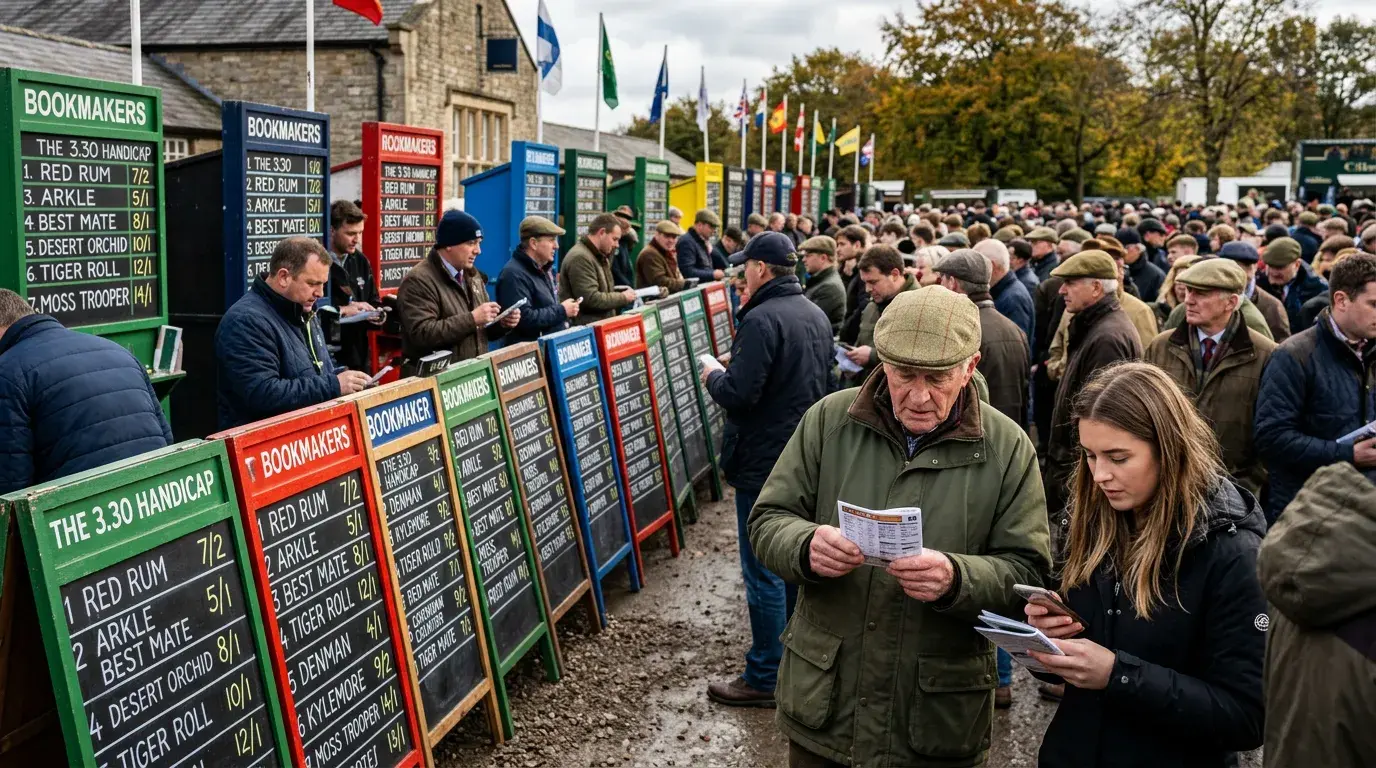
Every point of odds counts in a marathon. When fifteen of the last twenty-three Cesarewitch winners returned at double-figure prices, the difference between backing at 16/1 versus 14/1 represents meaningful money over time. Serious punters treat odds comparison as essential homework rather than optional extra effort.
The Cesarewitch attracts competitive pricing from major bookmakers precisely because it generates substantial betting interest. Large fields and uncertain outcomes create pricing challenges that different operators solve differently. These variations present opportunities for bettors willing to shop around rather than accepting the first price they see.
Understanding why odds differ, how to compare them efficiently, and when those differences matter most transforms casual betting into structured value-seeking. The tools and techniques for finding best prices have never been more accessible, yet many punters still leave money on the table through habit or convenience. In a race where long-priced winners are common, maximising the odds obtained on each selection directly impacts long-term profitability.
How Odds Vary Between Bookmakers
Bookmaker odds reflect a combination of genuine probability assessment and commercial positioning. Each firm balances their desire to attract bets against their need to manage risk and maintain profitable margins. These competing pressures create price variations that shrewd bettors exploit.
The over-round represents the margin bookmakers build into their prices. A perfectly fair book would total 100 percent when all probabilities are summed. In practice, books typically run between 105 and 120 percent depending on the race and operator. Lower over-rounds mean better value for punters, though they must be weighed against other factors like each-way terms and promotional offers.
Market position influences pricing strategy. Operators seeking market share may accept thinner margins to attract customers with competitive prices. Established firms with loyal customer bases can price more conservatively, knowing their punters prioritise convenience over value. These strategic differences persist across racing, creating consistent patterns that inform where to look for best odds.
Betting turnover on British racing continues to shift between operators and racing tiers. Premier fixtures like the Cesarewitch attract concentrated betting interest, prompting bookmakers to price competitively for these high-profile races while recovering margins elsewhere. Turnover on Premier meetings showed modest growth even as overall racing turnover declined, according to the BHA 2025 Racing Report.
The Cesarewitch’s field size amplifies pricing variations. With thirty-plus runners, bookmakers must price horses they know little about alongside well-fancied contenders. Their assessments of outsiders often diverge significantly, creating large price differences on horses in the 25/1 to 66/1 range. These are precisely the horses that frequently win this race.
Timing affects price availability. Early prices on the morning of the race typically offer tighter margins than odds available in the final minutes before the off. However, early prices may not reflect late market moves or non-runners. The trade-off between locking in value early versus waiting for complete information represents an ongoing tension in Cesarewitch betting.
Liability management creates temporary price anomalies. When a bookmaker takes significant bets on a particular horse, they may cut its price sharply while competitors maintain longer odds. Alert punters can exploit these moments, backing at firms yet to react to the market move. The speed with which prices now synchronise across the industry has shortened these windows, but they still occur around major races.
Comparing Major UK Bookmakers
The British betting landscape features distinct operator types, each with characteristic pricing approaches. Understanding these patterns helps punters know where to look for value without checking every site for every bet.
Traditional high-street operators like William Hill and Ladbrokes maintain extensive retail networks alongside their online platforms. Their pricing reflects this dual presence, often competitive on headline races like the Cesarewitch while less aggressive on smaller events. Their each-way terms for big handicaps typically match industry standards, offering 1/4 odds for five or six places in fields of sixteen runners or more.
Betting exchange Betfair operates fundamentally differently, matching backers against layers rather than acting as bookmaker. Exchange prices often beat traditional bookmaker odds, particularly for well-fancied horses, though liquidity can be limited on outsiders. The commission charged on winning bets, typically between 2 and 5 percent depending on customer status, must be factored into value calculations.
Irish operators including Paddy Power and Boylesports bring competitive pressure to the UK market. Their pricing on Irish-trained horses sometimes reflects information advantages, making them worth checking for Cesarewitch raiders from across the Irish Sea. Their promotional activity around major races often includes enhanced each-way terms or money-back specials.
Newer digital-first operators tend toward aggressive pricing as they build market share. These firms typically offer lower over-rounds but may restrict successful customers more quickly than established operators. For Cesarewitch betting, they provide useful comparison points even if not every punter can sustain accounts with them long-term.
Asian-facing operators accessible through odds comparison sites sometimes offer best prices, particularly in the final minutes before a race. Their pricing reflects different customer bases and risk appetites, occasionally producing outlier odds that represent genuine value. Checking these alternatives takes minimal effort when using aggregator tools.
Best odds guaranteed policies, offered by most major UK bookmakers, reduce the cost of taking early prices. If the starting price exceeds the price taken, the punter receives the higher return. This protection makes early betting more attractive and reduces the penalty for backing before the market settles.
Finding Value in the Market
Odds comparison sites aggregate prices from multiple bookmakers into single interfaces, eliminating the need to check each operator individually. Services like Oddschecker display current prices across dozens of bookmakers, highlighting best odds for each selection. These tools have transformed value-seeking from tedious manual checking into quick reference exercises.
The comparison process should begin before finalising selections. Knowing that one bookmaker offers 20/1 while another offers 16/1 might influence which horses make the final shortlist. A selection that offers value at 20/1 might not justify backing at 16/1, making price availability part of the selection process rather than an afterthought.
Each-way terms vary between operators and represent hidden value or cost. For the Cesarewitch, where field sizes guarantee at least five places paid, the difference between 1/4 odds and 1/5 odds on the place portion significantly affects returns. A 20/1 winner paying 1/4 odds for places returns more than a 22/1 winner paying 1/5 odds. Comparing total expected value rather than headline odds alone captures this distinction.
Price movement tracking reveals market sentiment and potential opportunities. Horses whose prices drift across all bookmakers face market scepticism that may or may not prove justified. Those shortening uniformly attract confidence that increases the cost of backing them. Horses showing divergent price movements across bookmakers create arbitrage-like opportunities for punters quick enough to act.
Multiple accounts enable exploiting price differences across operators. Maintaining funded accounts with several bookmakers allows backing selections at best available odds without compromising on price. The administrative overhead of managing multiple accounts proves worthwhile for punters betting frequently enough to justify the effort.
The long-term impact of consistently taking best odds compounds significantly. A punter who systematically backs at prices 5 percent better than average will show materially superior returns over hundreds of bets. This edge requires no additional handicapping skill, only the discipline to check comparisons and act accordingly. For Cesarewitch betting specifically, where winners frequently return double-figure odds, those extra points translate to meaningful profit differences.
