 Available in US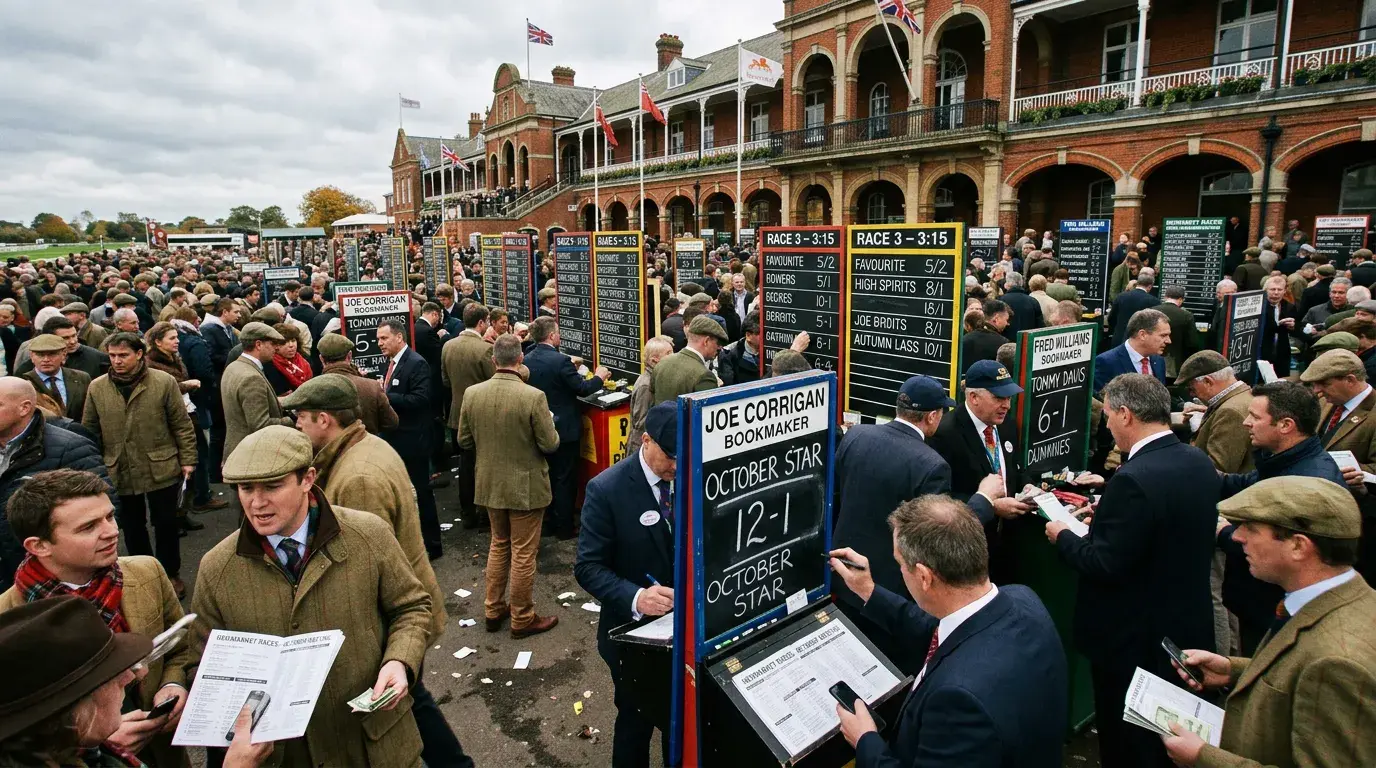
The Cesarewitch betting market behaves differently from most races because thirty-four runners create complexity that smaller fields cannot match. Money distributes across more options, prices fluctuate in response to fragmented information, and the relationship between market leader and outsiders follows patterns specific to maximum-field handicaps.
Understanding these dynamics matters because betting markets contain information. Prices reflect aggregated assessments of probability, incorporating everything from stable confidence to public sentiment. Reading the market before placing the bet—understanding what price movements signal and where value might exist—improves decision quality regardless of the underlying selection methodology.
This guide examines how Cesarewitch markets form, explores liquidity patterns across the field, and identifies the price movement signals that informed bettors track when positioning themselves for the autumn’s most challenging handicap.
How the Market Forms
Cesarewitch markets open weeks before the race, initially as ante-post prices based on early entries and provisional handicap allocations. These early prices reflect bookmaker assessments combined with anticipated public interest. Horses from prominent trainers, previous winners, and those with obvious credentials typically open shorter; unknowns and seemingly disadvantaged runners trade at bigger prices.
As entries narrow through forfeit stages, markets adjust. Withdrawals remove horses entirely, redistributing probability across remaining runners. Each departure theoretically shortens every other horse’s odds, though the practical effect varies. Removing a 100/1 outsider barely registers; withdrawing a 10/1 contender noticeably compresses the market.
Betting turnover on British racing fell by six point eight percent in 2024 compared to 2023, a decline that affects market depth across all races including the Cesarewitch. Thinner markets mean wider spreads between back and lay prices on exchanges, reduced liquidity for substantial wagers, and potentially more volatile price movements when large bets arrive. This structural shift encourages early positioning rather than waiting for raceday when liquidity may prove inadequate.
Bookmakers set initial prices based on tissue calculations—estimated probabilities before public betting begins. These tissues incorporate handicap ratings, trainer records, jockey bookings, and historical patterns. The Cesarewitch tissue typically shows a broadly distributed market, with the favourite around 8/1 to 12/1 and a thick band of runners between 16/1 and 33/1. This distribution reflects genuine uncertainty rather than clear hierarchies.
Once betting opens, prices respond to money flow. Early money tends to come from informed sources—professional punters, stable connections, and those with genuine insight—rather than recreational bettors who typically wait closer to raceday. Monitoring early price movements can therefore identify horses attracting serious interest before the general public engages.
Final market formation occurs on raceday as volumes surge. The morning markets often differ substantially from the starting prices returned when the stalls open. Horses that drifted through the week may suddenly attract support; others may continue drifting despite earlier confidence. The final hour before a race produces the most significant adjustments, making live market monitoring valuable for those still deciding their positions.
Liquidity Patterns in Big Fields
Market liquidity—the ease with which bets can be placed without moving prices—distributes unevenly across Cesarewitch fields. Understanding this distribution helps bettors execute positions effectively.
Favourites attract the most liquidity. Whatever trades at the shortest price draws recreational money seeking modest returns and professional money hedging positions. Backing or laying the Cesarewitch favourite involves minimal price impact because substantial volume awaits on both sides. This liquidity makes favourites attractive for traders rather than position bettors.
Second and third favourites also command reasonable liquidity, though less than the market leader. Prices here remain stable enough for moderate stakes without dramatic impact. The band from roughly third favourite to tenth favourite typically offers adequate liquidity for individual punters while presenting more interesting value propositions than the obvious choices.
Historical data shows that fifteen of the last twenty-three Cesarewitch winners finished at double-figure odds, suggesting that value exists outside the market leaders. However, outsiders face liquidity challenges. Horses trading at 33/1 or longer attract limited interest, meaning large bets can shift prices dramatically. This illiquidity cuts both ways: sharp money moving into an outsider produces visible price contraction that signals informed interest, but placing your own substantial wager proves difficult without moving the market against yourself.
Exchange liquidity differs from bookmaker capacity. Betfair and similar platforms show available money at various price points, allowing bettors to assess depth before committing stakes. Bookmakers accept bets up to their liability limits without displaying available liquidity. For larger stakes, exchanges may prove preferable because you can see exactly what money awaits; for smaller wagers, bookmaker prices often exceed exchange equivalents after commission.
Time-of-day patterns affect liquidity significantly. Morning markets trade thinner than afternoon ones; raceday liquidity exceeds pre-race levels substantially. Bettors seeking to place meaningful stakes without moving prices should time their activity for high-volume periods, typically the final two hours before the race when recreational money floods in.
Reading Price Movements
Price movements encode information that attentive bettors can decode. Horses whose odds shorten attract money; those drifting repel it. The magnitude, timing, and source of movements all carry meaning.
Steamers—horses whose odds contract significantly—may signal informed confidence. A horse trading at 25/1 on Monday morning that reaches 16/1 by Thursday afternoon has attracted genuine support. This support might come from stable connections aware of improved home work, professional analysts identifying overlooked form, or simply bandwagon effects following initial moves. Distinguishing meaningful steam from noise requires context: is the shortening accompanied by credible information, or merely following market fashion?
Drifters present inverse opportunities. A horse trading at 12/1 that drifts to 20/1 may face genuine problems—injury concerns, unfavourable ground forecasts, or poor home gallops—or may simply be suffering market neglect despite unchanged merit. Contrarian bettors often target drifters whose price deterioration seems unwarranted by fundamentals, though this approach requires conviction that the market is wrong.
The source of price movements matters. Exchange movements result from actual betting activity, making them genuine signals of money flow. Bookmaker price changes may reflect liability management rather than fresh money—a bookmaker might shorten a horse simply because they have already accepted substantial wagers and wish to limit further exposure. Reading bookmaker moves requires understanding that commercial considerations mix with informational signals.
Raceday moves carry particular weight. A horse that shortens from 20/1 to 14/1 in the final hour before a Cesarewitch attracts attention because late money often comes from those with superior information. Stable staff placing bets after morning exercise, professional watchers who observed encouraging paddock demeanour, or anyone else with last-minute insight tends to act close to race time rather than days in advance.
Interpreting price movements requires humility. Markets aggregate many opinions, and apparent signals sometimes mislead. A horse that steams and then loses simply attracted confident money that proved wrong; a drifter that wins was underestimated despite clear market signals. The goal is not to predict outcomes with certainty but to weight information appropriately—recognising that market moves contain genuine information while accepting that no signal guarantees success in a thirty-four-runner handicap.
