 Available in US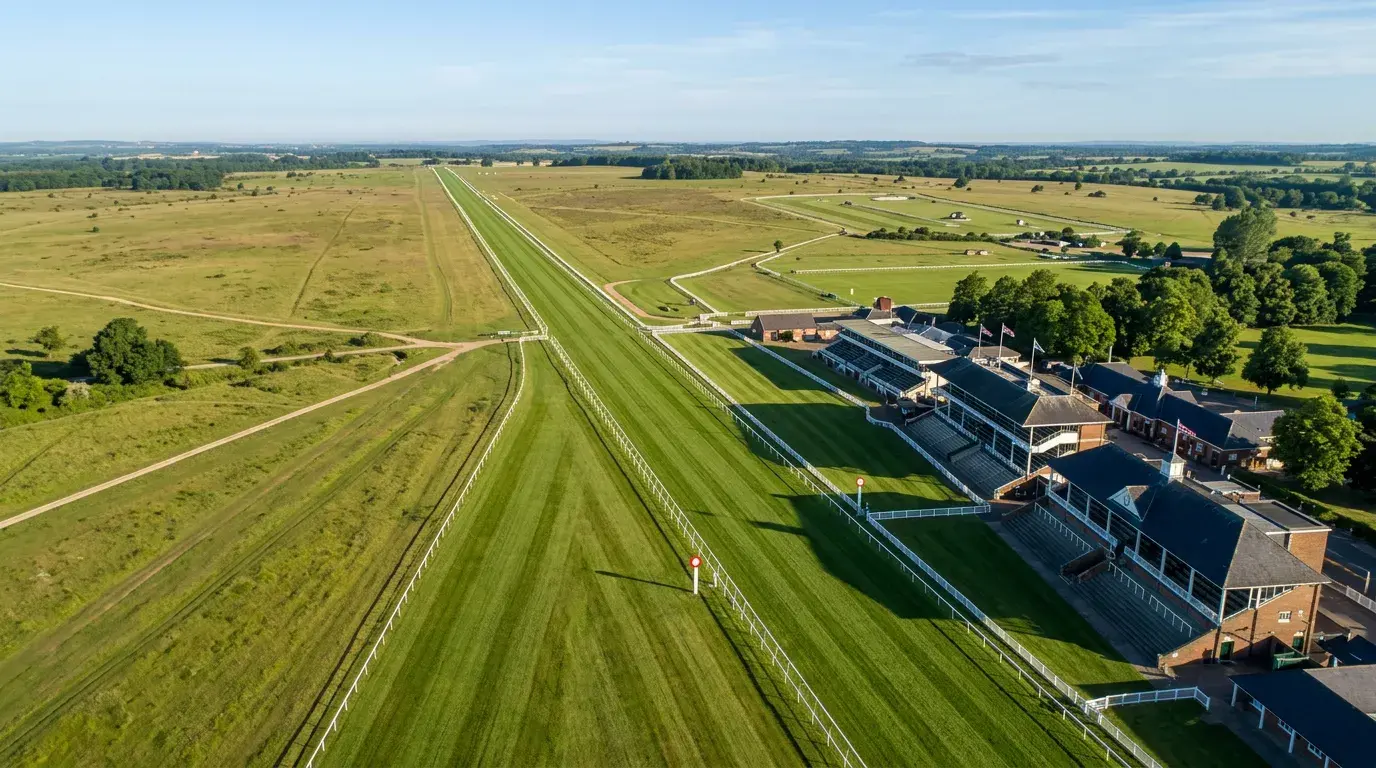
The headquarters of British racing. Newmarket has held that title for over three centuries, and the Rowley Mile course remains the proving ground where champions are made and pretenders exposed. For Cesarewitch bettors, understanding this unique track provides essential context for evaluating contenders and identifying those suited to its particular demands.
The Rowley Mile differs fundamentally from every other British racecourse. Its straight configuration eliminates the bends that offer tactical variety elsewhere. Its undulating terrain creates challenges invisible to casual observers. Its exposed position on the Suffolk heath means weather affects racing more dramatically than at sheltered venues. These characteristics shape every Cesarewitch renewal and create opportunities for punters who understand them.
Knowing the course helps explain why certain horses thrive here while others underperform their form. The Cesarewitch’s two miles two furlongs tests more than stamina alone. It demands horses capable of handling Newmarket’s specific demands while maintaining enough reserve to fight through the attritional final furlongs. Previous course form carries weight here precisely because the track asks questions that other venues do not pose.
Course Layout and Characteristics
The Rowley Mile stretches across Newmarket Heath in a straight line from the Cesarewitch start near the Cambridgeshire bushes to the winning post adjacent to the grandstands. This linear configuration removes the tactical complexity that bends provide at most British courses. There is no inside rail advantage through turns, no opportunity to save ground on corners. Every yard of the two miles two furlongs must be covered honestly.
The track width exceeds most British courses, typically accommodating the full Cesarewitch field of thirty-four runners without excessive crowding. This width creates multiple racing lines, with ground conditions sometimes varying across the track. Jockeys must assess where the best ground lies and position accordingly, adding another variable to an already complex race.
Draw bias exists but operates differently from tracks with bends. Fourteen of the last twenty-three Cesarewitch winners emerged from stalls thirteen or lower, suggesting a modest advantage for lower draws. This pattern likely reflects the tendency for pace to develop on the stands side and the energy savings available to horses racing near the inside rail over such an extended trip.
The cambered surface tilts slightly from the stands side toward the far rail. This gradient, imperceptible to spectators but meaningful to horses, affects how runners balance through the race. Horses that drift under pressure may find themselves climbing the camber rather than using it, wasting effort at exactly the wrong moment.
Starting stalls for the Cesarewitch position near the two-mile start, requiring horses to travel the full Rowley Mile course plus an additional two furlongs. The initial stages pass through relatively featureless terrain before the famous Dip and rising finish come into play. Horses unfamiliar with Newmarket sometimes struggle to gauge their effort through these early stages.
The turf quality at Newmarket benefits from the underlying chalk that promotes drainage and maintains healthy grass coverage through the autumn. This geological advantage means the Rowley Mile typically rides faster than equivalent going descriptions at clay-based courses, a factor that catches out punters unfamiliar with Newmarket’s characteristics.
Track Characteristics for 2m2f
The Cesarewitch distance of two miles two furlongs uses nearly the entire Rowley Mile course plus a starting extension. This extended trip amplifies every characteristic of the track, turning minor undulations into significant stamina tests and exposing horses that lack genuine staying power.
The famous Dip represents the course’s most demanding feature. Located approximately two furlongs from the finish, this depression in the terrain requires horses to descend before climbing back toward the winning post. Horses already under pressure find the Dip devastating, their momentum lost as they struggle up the rising ground. Fresh horses use the Dip to launch attacks, knowing that rivals ahead may be running on empty.
The rising finish from the Dip to the line covers the final furlong and a half. This uphill gradient, though modest by National Hunt standards, proves decisive in marathon handicaps. Horses that have emptied their reserves through the race find the climb insurmountable. Those with stamina in reserve can make ground through the final stages while others retreat.
British racecourses attracted 4.8 million spectators in 2024, according to the Racecourse Association, with Newmarket’s prestigious fixtures drawing significant crowds. The Cesarewitch forms part of the Future Champions Festival, bringing additional atmosphere and attention to this historic venue. The grandstand vantage point allows spectators to watch the entire race unfold along the straight course, creating a viewing experience unlike any other in British racing.
Wind exposure on the open heath affects how the course rides. Headwinds into the finish increase stamina demands, potentially catching out horses whose form was achieved on calmer days. Tailwinds can produce artificially fast times that mislead form students. Crosswinds create sideways pressure that affects horses differently depending on their action and temperament.
The straight configuration means there is nowhere to hide for horses struggling with the pace. At tracks with bends, a tiring horse can briefly shelter while navigating corners. On the Rowley Mile, effort must be sustained continuously, making the final half-mile particularly brutal for those whose stamina reserves have depleted.
Tactical Demands of the Straight
Racing on a straight course removes certain tactical options while creating others. Jockeys cannot save ground on bends or use the rail through turns to gain positional advantage. Instead, tactics focus on energy conservation, positioning for the finish, and timing the final effort to coincide with the Dip’s challenges.
The ideal Cesarewitch ride involves settling in midfield through the early stages while avoiding traffic problems. With thirty-plus runners, congestion develops inevitably, particularly when the pace slackens through the middle mile. Jockeys must balance the desire to stay out of trouble against the energy cost of racing wide.
Pace judgment matters enormously on the straight course. Without bends to provide natural reference points, jockeys must rely on experience and instinct to gauge whether the early fractions are too fast, too slow, or about right. Misjudging the pace leads to either wasted effort setting too strong a gallop or leaving too much to do when the sprint develops.
The long straight run to the finish means challenges can come from anywhere in the field. A horse sitting last at halfway can still win if it produces a sustained run through the final mile. Conversely, early leaders cannot assume they have stolen a decisive advantage, knowing that closers have ample time to reel them in. This dynamic creates exciting finishes but punishes tactical errors.
Course specialists exist at Newmarket as they do everywhere, though the advantage comes more from understanding the track’s demands than from any hidden shortcuts. Horses that have previously handled the Dip, negotiated the cambered surface, and coped with the exposed conditions arrive with proven credentials. First-time visitors face steeper learning curves.
The absence of bends means pure speed and stamina determine outcomes more directly than at conventional courses. Tactical nous still matters, but it cannot compensate for fundamental deficiencies in ability or fitness. The Rowley Mile rewards honest horses that stay the trip and punishes those relying on tricks their jockeys cannot deploy on a straight track. For bettors, this transparency makes form analysis more reliable than at courses where tactical factors introduce additional variables.
