 Available in US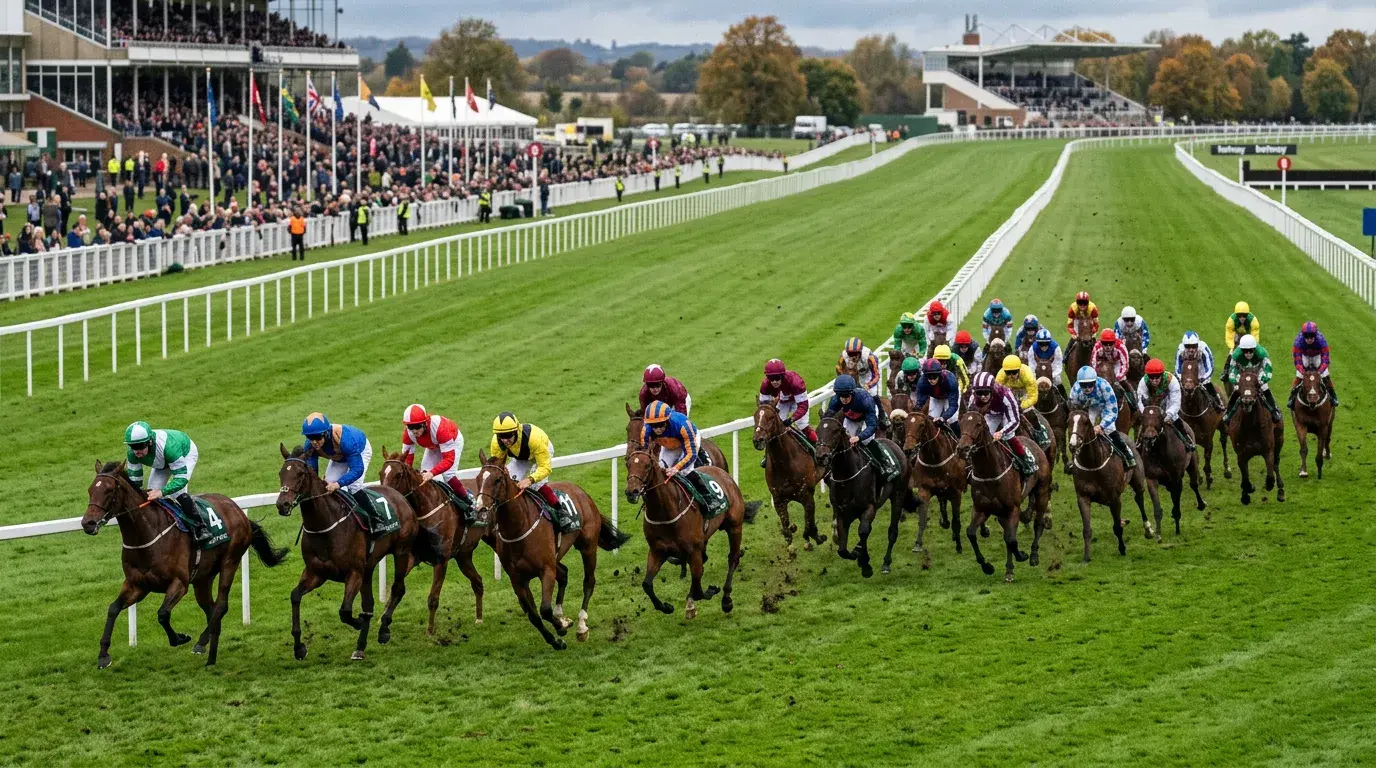
Over two miles and two furlongs, pace becomes destiny. The Cesarewitch distance magnifies tactical decisions that would barely register in shorter races. A horse that goes too fast too early burns reserves needed for the final climb; one that settles too far back faces traffic problems multiplied by thirty-four runners spread across Newmarket’s wide expanse.
Understanding pace scenarios helps identify which horses benefit from likely race dynamics. Some Cesarewitch fields contain multiple confirmed front-runners, suggesting a contested early gallop that favours closers. Others lack pace, setting up steadier races where prominent racers maintain advantages throughout. Reading these dynamics before betting improves selection quality.
Where the race is won — and lost — often comes down to the first half mile and final three furlongs. This guide examines pace mapping methods, analyses the historical performance of front-runners and closers, and explains how tactical positioning influences Cesarewitch outcomes.
Pace Mapping Methods
Pace mapping involves identifying which horses in a field prefer to lead or race prominently, then predicting how their interactions will shape the early gallop. The Cesarewitch’s large field makes this exercise more complex than in typical races, but the principles remain consistent.
Start by examining each horse’s recent form for positional information. Racing publications describe where horses raced relative to the field—”made all,” “tracked leader,” “held up,” “slowly away.” Collating this information across the field reveals how many natural front-runners have entered and how many typically come from behind.
Draw statistics show that fourteen of the last twenty-three Cesarewitch winners came from stalls thirteen or lower, suggesting that horses establishing forward positions early—easier from lower draws—maintain advantages throughout. This pattern reinforces the importance of identifying which low-drawn horses will likely press forward from the start.
When multiple confirmed front-runners draw close together, expect them to contest the lead. This scenario typically produces a fast early pace that depletes energy reserves and advantages patient closers. When front-runners draw apart, or when the field contains few natural leaders, a slower tempo becomes more likely, favouring those racing prominently from the outset.
Trainer tactics influence pace scenarios significantly. Some trainers instruct jockeys to make the running regardless of other factors; others adapt to circumstances. Willie Mullins’ Cesarewitch winners have employed various tactics, reflecting flexibility in approach. Checking trainer patterns—how their horses are typically ridden—adds another layer to pace assessment.
Jockey booking sometimes signals intended tactics. When a trainer books a jockey known for front-running tactics, they likely plan to make the pace. Conversely, riders renowned for patient, hold-up tactics suggest different intentions. These clues help refine pace predictions beyond what bare form figures reveal.
Sectional timing data, where available, quantifies horses’ early-race speed and finishing ability. Horses that record fast opening sectionals in previous races will likely do so again; those with strong finishing sectionals need the race to unfold at a pace that allows them to unleash that final kick. Matching sectional profiles to anticipated pace scenarios identifies horses whose running styles suit likely dynamics.
Front-Runners in the Cesarewitch
Leading from the front over two miles and two furlongs demands exceptional stamina and accurate judgement of pace. The horse that blazes clear early faces a lonely journey with no competitors to provide a lead, no slipstream to reduce effort, and no ability to dictate when rivals make their challenges.
Front-runners succeed in the Cesarewitch less frequently than their prominence in race coverage suggests. The distance simply extends too far for most pace-setters to maintain their advantage. Horses that lead at the two-furlong pole often find themselves swamped by fresher rivals in the closing stages, their early efforts extracting a toll that nothing can repay.
The successful front-runners share common characteristics. They possess genuine stamina rather than merely speed that happens to take them to the front. They relax while leading, conserving energy rather than pulling against the jockey. Their jockeys judge the pace precisely, going fast enough to discourage challengers but slow enough to preserve reserves. This combination of physical gifts and tactical execution appears rarely.
Energy depletion over marathon distances follows predictable patterns. Horses expend more energy leading than following, due to wind resistance and the psychological burden of being hunted. This expenditure compounds over two miles, leaving front-runners with depleted reserves precisely when rivals launch their challenges. The mathematics favour closers unless front-runners possess genuine class advantages.
When considering front-running Cesarewitch candidates, look for horses that have led and won over distances approaching two miles—evidence that their stamina suffices for the task. Horses whose front-running wins came over ten or twelve furlongs may lack the reserves to replicate that style over an additional half-mile or more.
Ground conditions affect front-runner prospects significantly. On genuinely soft ground, pace-setters tire even faster as each stride demands greater effort. Good or good-to-firm ground, more typical at Newmarket in October, proves somewhat less punishing. Assessing ground alongside tactical expectations helps calibrate front-runner chances appropriately.
Closers and Late Runners
Hold-up horses face different challenges. They must navigate through large fields while conserving energy, find racing room at critical moments, and time their finishing runs to catch fading leaders without running out of course. The Cesarewitch’s two-mile-two-furlong trip provides runway for closers, but the wide Newmarket straight sometimes allows front-runners to steal decisive advantages.
Thirteen of the last twenty-three Cesarewitch winners came from National Hunt trainers—yards that specialise in patient, hold-up tactics refined over jumping’s extended distances. These trainers understand how to prepare horses for races won from off the pace, and their Cesarewitch success reflects tactical sophistication as much as stamina breeding.
The optimal closing position in the Cesarewitch involves sitting perhaps tenth to fifteenth through the early stages, close enough to avoid traffic problems while far enough back to save energy. From this position, a horse can pick off tiring rivals through the final half-mile without facing the blank wall of bodies that defeats those held up further back.
Timing the run requires jockeys to read the pace accurately. If front-runners have gone slowly, closers must move earlier to bridge the gap before leaders establish decisive breaks. If the pace has been fierce, patience pays—waiting for tiring horses to come back allows closers to sweep past exhausted rivals in the final furlong. Misjudging this timing represents the primary risk for hold-up horses.
The Cesarewitch finish at Newmarket presents a visual challenge for jockeys. The uphill finish deceives riders about how much horse they have left; the wide track offers multiple paths to the line. Closers who get stuck behind tiring horses can lose ground switching, while those who find gaps maintain momentum toward the winning post.
When assessing closers, examine their previous finishing sectionals and their jockeys’ tactical records. A horse that finished fast in previous races with a jockey adept at timing finishing runs represents a better prospect than one with similar sectional ability but a less tactically sophisticated rider. The combination of horse stamina and jockey judgement determines whether closing tactics succeed.
