 Available in US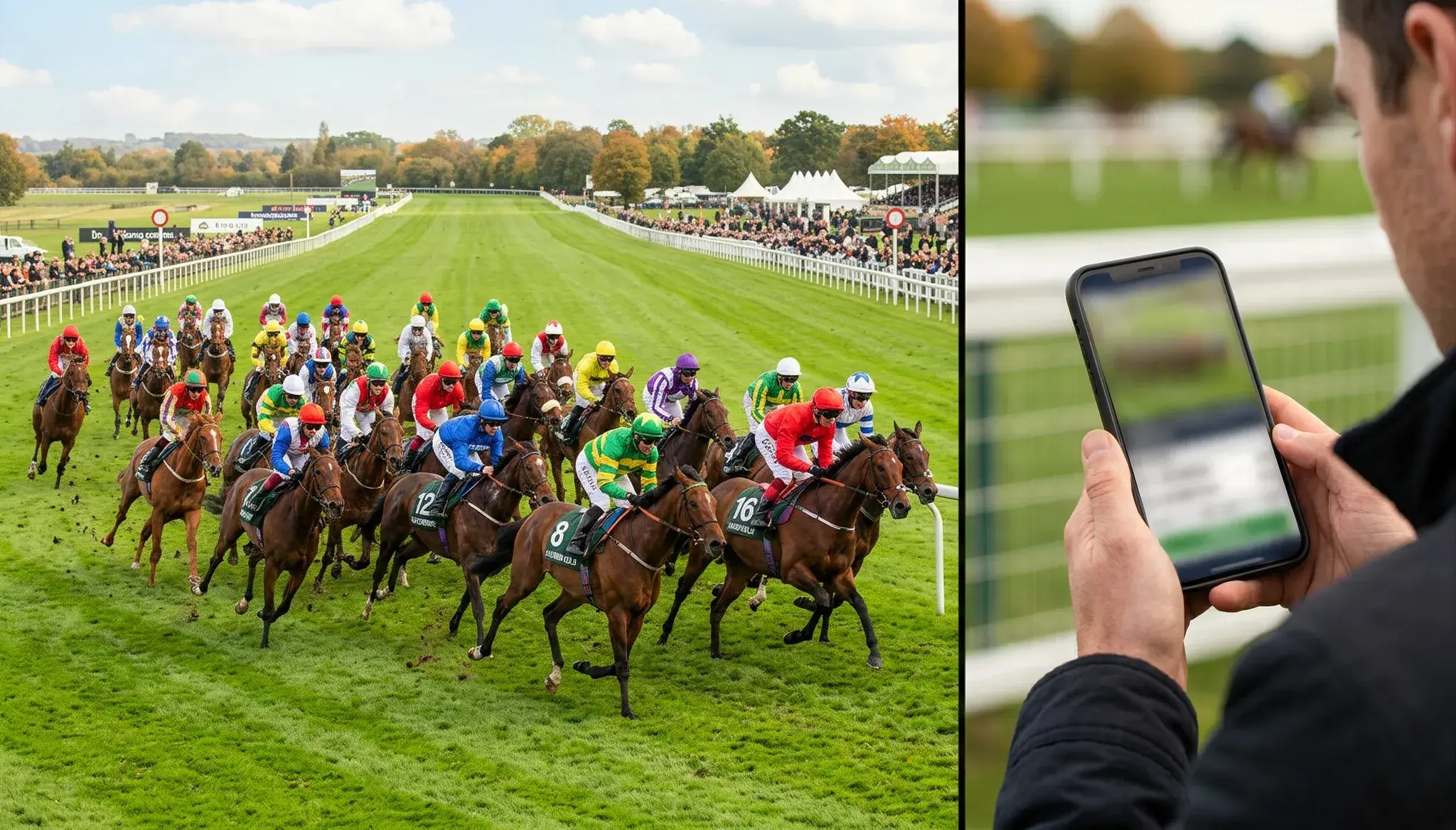
Most horse races are over before the in-play market truly finds its feet. A five-furlong sprint finishes in under a minute. Even a mile-and-a-half Classic gives you perhaps two minutes to react. The Cesarewitch offers something different: two miles and two furlongs of evolving theatre, roughly four minutes from stalls opening to photo finish. That duration transforms live betting from a frantic gamble into something resembling actual strategy.
In-play betting on the Cesarewitch presents unique opportunities precisely because the marathon distance creates extended decision windows. The race unfolds in phases—the early scramble for position, the middle-distance waiting game, the final four-furlong examination of reserves. Each phase shifts odds dramatically, and understanding when to engage becomes as important as understanding which horse to back.
Riding the odds as the race unfolds demands preparation that begins long before the stalls open. This guide examines how live markets function during the Cesarewitch, explores strategies specific to the two-mile-two-furlong trip, and identifies the timing signals that separate informed in-play bettors from those simply watching their selections sink or swim.
How Live Betting Works
In-play markets operate through two distinct channels: traditional bookmaker platforms and betting exchanges. Understanding the difference matters more for Cesarewitch betting than for shorter races, because the extended duration magnifies both the opportunities and the pitfalls of each approach.
Bookmaker in-play markets offer simplicity but impose constraints. When you back a horse at a bookmaker during the race, you receive a fixed price reflecting that moment’s assessment of probability. The catch lies in latency—the delay between what happens on course and what appears on your screen. Bookmakers also suspend markets during critical moments, typically when the field enters the final two furlongs, precisely when price movements become most dramatic. This suspension policy exists to protect bookmakers from informed viewers exploiting broadcast delays, but it removes your ability to act when decisions often matter most.
Betting exchanges function differently. On platforms like Betfair, you trade against other punters rather than against the house. Prices move continuously based on actual betting activity, and you can both back and lay horses throughout the race. The exchange model suits Cesarewitch in-play betting because the four-minute duration allows genuine price formation—enough traders are active to create meaningful liquidity even as the race develops. Exchange commission structures typically take five percent of net winnings, a cost worth factoring into your calculations.
The liquidity question deserves attention. Big-field handicaps like the Cesarewitch attract substantial in-play trading volume because the fields contain genuine uncertainty. Recent analysis shows that fifteen of the last twenty-three Cesarewitch winners finished at double-figure odds, meaning outsiders frequently deliver. That unpredictability keeps exchange markets active—traders who might dismiss shorter races as foregone conclusions remain engaged throughout the Cesarewitch because the winner genuinely remains in doubt.
Position matters more than raw pace in the early stages of the Cesarewitch. Fourteen of the last twenty-three winners drew stall thirteen or lower, suggesting that horses establishing favourable positions early tend to maintain advantages throughout the marathon distance. For in-play bettors, this creates an early observation window: horses settling into prominent positions from low draws warrant closer attention as the race develops.
The mechanics of placing in-play bets require preparation. Before the race begins, identify your target horses and ensure you can access their prices quickly. Pre-load your betting slip amounts. Know your maximum stakes. The Cesarewitch rewards those who act decisively rather than those who hesitate while the market moves against them.
In-Play Strategy for 2m2f
The two-mile-two-furlong Cesarewitch distance divides naturally into three phases, each presenting distinct betting considerations. Your in-play strategy should account for all three rather than treating the race as a single continuous event.
The first phase covers the opening half-mile, where thirty-four horses funnel from wide stalls into racing positions. Prices during this phase often overreact to early trouble. A horse bumped at the start might see their odds drift from 12/1 to 20/1 within seconds, despite suffering minimal actual disadvantage. If you identified such horses beforehand as live contenders, this temporary drift can offer enhanced value. The key distinction lies between genuine trouble—being badly hampered, losing multiple lengths—and the minor inconveniences that accompany big-field racing.
The middle phase, roughly from the six-furlong pole to the three-furlong marker, represents the waiting game. Jockeys conserve energy, positioning improves or deteriorates subtly, and the pace scenario becomes clearer. This phase suits observation rather than aggressive betting. Watch which horses are travelling well within themselves, note which are already being asked questions, and identify any who have found themselves poorly positioned. Your ante-post selections should ideally be cruising through this section; if they are struggling here, the final phase rarely improves matters.
The final phase begins when the field enters the final three furlongs and the race begins in earnest. Exchanges see massive volume spikes during this period as horses accelerate, tire, or make decisive moves. The practical challenge involves processing visual information while simultaneously managing your betting interface. Many experienced in-play bettors recommend watching the race without sound, as commentary can distract from your own observation. Others prefer to position their screen so that the live market appears beside the race picture, allowing simultaneous monitoring.
One approach that suits the Cesarewitch involves pre-race scenario planning. Before the off, identify two or three contingencies: “If Horse A is in the first five at the two-furlong pole, I will back them to a maximum of £X at any odds above Y.” This removes decision-making pressure during the race itself. You simply execute predetermined plans rather than attempting complex probability calculations while watching thirty-four horses navigate the final furlongs.
Pace reading forms another essential in-play skill. The Cesarewitch is typically run at a genuine gallop given the distance, but variations occur. If the early pace seems unusually steady—front-runners dictating terms without pressure—closers face a disadvantage because the leaders retain more energy for the finish. Conversely, a strongly contested early pace exhausts front-runners and advantages horses held up. Adjust your in-play targeting accordingly. When pace seems slow, give greater credence to prominently-positioned horses; when pace seems fierce, watch for late runners picking off tired leaders.
Timing Signals to Watch
In-play betting success depends on reading signals faster than the market prices them. The Cesarewitch offers several reliable indicators worth monitoring.
Jockey body language provides early warnings that often precede obvious visual cues. A jockey sitting still at the halfway mark signals a horse travelling well. One who begins pushing and scrubbing along indicates a horse requiring encouragement—rarely a positive sign with a mile still to travel. The shift from stillness to effort marks the moment when a horse transitions from contender to struggler, and markets typically lag this visual information by several seconds.
Position relative to the rail matters throughout. Horses racing wide around the bends cover extra ground, a cumulative disadvantage over two miles and two furlongs. The Rowley Mile course lacks sharp turns, but even gradual bends extract a toll on wide runners. Watch for horses being shuffled outward through the middle phase; their prices should drift accordingly, and if they do not, the market may be underestimating their disadvantage.
The two-furlong pole serves as the critical marker. Here, horses that have been travelling well must translate potential into acceleration. Some fail to quicken despite appearing comfortable; others find reserves that seemed absent. In-play bettors face a narrow window—perhaps fifteen seconds—between the two-furlong marker and bookmaker suspension or exchange illiquidity. Those who act decisively within this window can capture significant value on horses making visible progress.
Market movements themselves constitute signals. Exchange prices reflect collective information, and sudden dramatic shifts often indicate something happening that viewers have not yet processed. If a horse’s price collapses from 16/1 to 8/1 within seconds, experienced on-course observers may have identified something—improved position, a rival in trouble—that broadcast viewers are yet to see. Following such movements carries risk, but the information they contain should inform your assessment.
One practical approach involves identifying your strike zone before the race. Determine the point at which you will act: perhaps the three-furlong pole, perhaps earlier. Know which horses you are watching, what prices you consider value, and what stake you will commit. This preparation transforms in-play betting from chaotic reaction into structured execution. The Cesarewitch’s generous duration allows this preparation to matter in ways that shorter races do not permit.
The goal is not to bet on every Cesarewitch in-play, but to recognise when conditions favour intervention. Sometimes your pre-race selection travels badly and no sensible in-play opportunity emerges. Other times, a horse you identified as a value alternative presents odds that demand action. The marathon distance gives you time to distinguish between these scenarios—time that sprint and middle-distance races simply cannot provide.
